The vitamin you've probably never heard of
Quick quiz: name a nutrient your body absolutely cannot produce, actively pulls out of your food using a purpose-built transporter, and concentrates in your brain, liver, eyes and blood cells — yet somehow never made it onto the side of a cereal box. If you drew a blank, don't feel bad. Ergothioneine (say it "er-go-thigh-oh-neen") is one of the least famous molecules in nutrition, and also one of the more quietly fascinating ones. In 2026 it's finally having its moment, popping up in longevity newsletters and getting picked up by major supplement brands. So let's do the clean thing and check whether the excitement is earned.
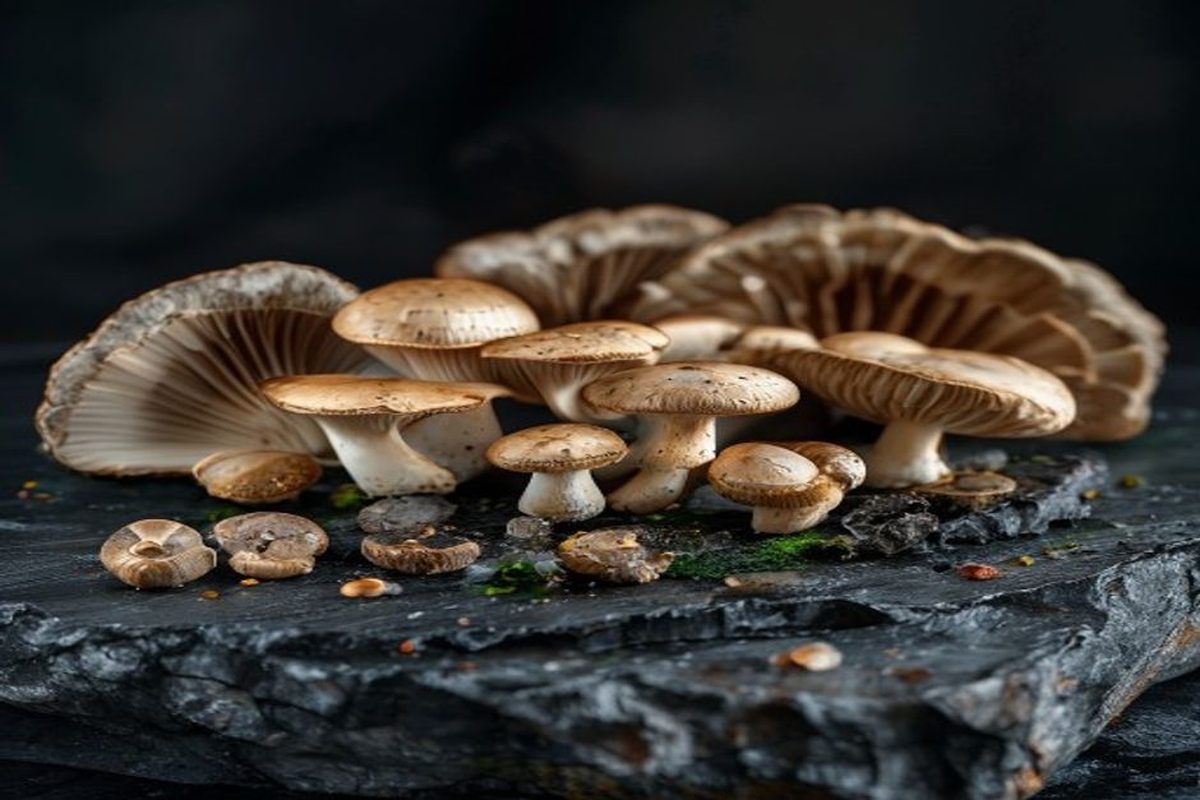
Ergothioneine is a sulfur-containing amino acid (chemical formula C9H15N3O2S) made mostly by fungi and certain soil bacteria. Which is a polite way of saying: mushrooms are loaded with it, and animals — including you — can't synthesize a single molecule of the stuff. Everything in your body arrived there via your dinner plate. Oyster, shiitake, king oyster and porcini mushrooms are the jackpot sources; smaller amounts sneak in through oat bran, beans, garlic and organ meats grown in the right soil. Eat mushrooms regularly and your levels climb. Skip them for years and they quietly fall.
Why a "special door" is a genuinely big deal
Here's the detail that made scientists sit up. Back in 2005, researchers discovered that a transporter protein called OCTN1 (gene name SLC22A4) is startlingly good at one specific job: grabbing ergothioneine and ferrying it into cells. Your body is dotted with these transporters, and they concentrate ergothioneine in exactly the places that take the most oxidative punishment — the liver, the lens of the eye, bone marrow, red blood cells, the brain. Cells under stress crank up the transporter to hoard even more of it.
Why does that matter? Because evolution is a stingy accountant. It doesn't build a dedicated delivery system and VIP storage lockers for a molecule that does nothing. The existence of OCTN1 is a strong hint that your body considers ergothioneine worth keeping — which is why the late nutrition scientist Bruce Ames floated the idea that it might be a "longevity vitamin": not essential in the classic scurvy-and-rickets sense, but a compound that helps you age well over decades rather than keeling over next Tuesday if you skip it. It's a lovely hypothesis. On this site, a lovely hypothesis is where the homework starts, not where it ends.
What it actually does: the body's oxidative-stress bodyguard
Mechanistically, ergothioneine behaves like a particularly well-placed antioxidant and cell protector. It mops up damaging reactive oxygen species, chelates troublesome metals, and — crucially — is remarkably stable, so it isn't used up the instant it does its job the way some antioxidants are. Because the OCTN1 transporter parks it inside cells and even inside mitochondria, it ends up standing guard right where oxidative damage and inflammation tend to start. In lab and animal work it calms neuroinflammation, protects mitochondria, and supports the cell's own stress-response machinery. That's a tidy mechanistic story. But mechanism slides have oversold a thousand supplements, so the only question that counts is what happens in actual humans.
The part that's genuinely impressive: the human numbers
This is where ergothioneine earns its spot in the conversation. Unlike a lot of longevity darlings that live and die in petri dishes, it has been measured in large groups of real people over long stretches of time — and the pattern is strikingly consistent.
The headline study came out of Sweden's Malmö Diet and Cancer cohort. Researchers tracked more than 3,200 adults for a median of over 21 years and found that higher blood ergothioneine was independently associated with a lower risk of coronary disease, cardiovascular death and death from any cause.[1] It also turned out to be one of the metabolites most tightly linked to a healthy dietary pattern — the kind rich in vegetables, fruit and, yes, mushrooms. In other words, the people quietly eating well had more ergothioneine on board, and they lived longer. That's a genuinely eye-catching result for a single food-derived compound.
The brain data rhymes with it. In a Singapore cohort of 470 older adults attending memory clinics, those with the lowest plasma ergothioneine had poorer cognition at baseline and declined faster over the following five years — across memory, attention, executive function and everyday function.[2] Low ergothioneine tracked with more small-vessel brain damage and shrinkage, too. Again and again, the same shape appears: less ergothioneine, worse aging. It's the kind of consistency that's hard to wave away.
The trial that moved it from "interesting" to "promising"
Associations are seductive and also treacherous — more on that shortly — so the field needed someone to actually give people ergothioneine and watch what happened. In 2024, a team in Singapore did exactly that. In a double-blind, placebo-controlled pilot, 19 older adults with mild cognitive impairment took either 25 mg of ergothioneine or a placebo three times a week for a full year.[3] The supplement group improved on a standard learning-and-memory test (the Rey Auditory Verbal Learning Test) and — arguably more interesting — kept their blood levels of neurofilament light chain steady, while the placebo group's climbed. Neurofilament light chain is a marker of nerve-cell damage, so "held flat" is the direction you want. And after a year of dosing, there was no toxicity: blood counts, kidney and liver markers all stayed normal.
That's a real, peer-reviewed, randomized human result pointing the same way as the big observational studies — which is exactly why ergothioneine is getting attention in 2026. It's also, let's be honest, a trial of nineteen people. Hold that thought.
The mouse chapter (the encouraging kind)
Animal work rounds out the picture. In a 2024 study, mice given ergothioneine in their drinking water from young adulthood lived meaningfully longer than untreated mice, stayed less frail, held onto more muscle and movement speed, and did better on learning and memory tasks late in life — with worms (C. elegans) showing a matching lifespan bump.[4] The treated animals also had lower levels of several blood markers that normally creep up with age. It's the closest thing yet to a direct "does it extend lifespan?" test, and the answer in mice was yes. You, however, are not a mouse, and mouse lifespan wins have a long history of not translating cleanly. So we file this under "promising and motivating," not "proven in you."
Now the deflating part (there's always one)
Time for the clean-longevity cold shower. The evidence for ergothioneine is legitimately strong for its category — but the strongest pieces are the weakest kind of proof.
Start with those impressive human studies. They're observational, which means they show correlation, not causation. People with high ergothioneine also tend to eat more vegetables and mushrooms, exercise, smoke less and generally live healthier lives. Ergothioneine may simply be a marker of a good diet rather than the active ingredient doing the work — a molecular fingerprint of eating your greens, not necessarily the reason you thrive. A recent 2025 review put it plainly: the observational signal is consistent, but proving cause still needs bigger, longer randomized trials.[5] Until those exist, "low ergothioneine predicts worse aging" and "taking ergothioneine fixes it" are two very different claims.
Then there's that trial. Nineteen people, three doses a week, one year — a pilot, in the truest sense. It's encouraging and it's real, but it is nowhere near large enough to build a health decision on, and it hasn't been replicated at scale. As always, keep an eye on who's paying: interest in ergothioneine is partly driven by the companies that sell it as an ingredient, and one author on that 2025 review works for a supplement-ingredient firm.[5] That doesn't make the science fake — these are real studies in real journals — but it's exactly why we lean on the independent cohorts and wait for the big trials rather than the marketing.
And nobody can yet tell you the "right" dose. The trials used modest amounts (around 25 mg), there's no official recommended intake, and we simply don't know whether more is better or where the ceiling of benefit sits. That's a lot of unknowns to hang a supplement habit on.
The clean verdict
Ergothioneine is one of the more genuinely intriguing molecules in the current longevity conversation — and refreshingly, it earned that with human data rather than pure vibes. The biology is elegant (your body built a special transporter to keep it), the safety record looks reassuring, and multiple large cohorts plus one small trial all point the same encouraging direction for heart and brain aging. That's a stronger, cleaner evidence base than most things shouted about under the "anti-aging" banner.
But "strong for the category" still isn't "proven to add years to your life," and the best evidence is associational. So here's the clean framing, and it's a happy one: the single most sensible move is also the cheapest and tastiest. Eat mushrooms regularly — a couple of servings of oyster or shiitake a week reliably raises your ergothioneine, comes bundled with fibre and other good things, and carries essentially zero downside. That's the food-first bet the evidence actually supports. A dedicated ergothioneine supplement is a more speculative purchase: safe as far as we know, plausibly useful, but riding on associations and a 19-person pilot rather than proof. If you have spare budget and enjoy being early to a well-reasoned experiment, it's a defensible one — just don't expect a bottle to outperform a life you haven't sorted out. Like our takes on urolithin A and the rest of the short list, the honest summary is the same: real science, modest effects, no miracles. We'll update this page the moment the big trials land.
Common questions
Ergothioneine (formula C9H15N3O2S) is a sulfur-containing amino acid your body cannot make. You get it entirely from your diet, and by far the richest source is mushrooms — especially oyster, shiitake, king oyster and porcini. Smaller amounts appear in oat bran, beans, garlic and organ meats. Your body treats it as precious: a dedicated transporter protein (OCTN1) actively pulls it out of food and concentrates it in tissues under oxidative stress.
Promising, not proven. Large human studies consistently show that people with low blood ergothioneine have higher rates of cognitive decline, cardiovascular disease and death[1][2] — but those are associations, not proof of cause. One small 2024 randomized trial in older adults with mild cognitive impairment found ergothioneine improved a learning-and-memory test and stabilized a marker of nerve-cell damage over a year.[3] Encouraging, but a 19-person pilot isn't the last word, and no trial has shown it extends human lifespan.
Human safety data so far look reassuring. Trials used around 25 mg per day for up to a year without toxicity or changes to blood, kidney or liver markers,[3] and ergothioneine has a long history of safe intake from mushrooms. There's no established optimal dose or official recommended intake yet, and long-term multi-year data don't exist. The lowest-risk way to raise your levels is to eat mushrooms regularly; if you consider a supplement, check with a doctor first, especially if you're pregnant, on medication or managing a condition.
References
- Smith E, Ottosson F, Hellstrand S, et al. Ergothioneine is associated with reduced mortality and decreased risk of cardiovascular disease. Heart. 2020;106(9):691–697. PubMed: 31672783. doi:10.1136/heartjnl-2019-315485
- Wu LY, Kan CN, Cheah IK, et al. Low Plasma Ergothioneine Predicts Cognitive and Functional Decline in an Elderly Cohort Attending Memory Clinics. Antioxidants (Basel). 2022;11(9):1717. PubMed: 36139790. doi:10.3390/antiox11091717
- Yau YF, Cheah IK, Mahendran R, et al. Investigating the efficacy of ergothioneine to delay cognitive decline in mild cognitively impaired subjects: A pilot study. J Alzheimers Dis. 2024;102(3):841–854. PubMed: 39544014. doi:10.1177/13872877241291253
- Katsube M, Ishimoto T, Fukushima Y, et al. Ergothioneine promotes longevity and healthy aging in male mice. GeroScience. 2024;46(4):3889–3909. PubMed: 38446314. doi:10.1007/s11357-024-01111-5
- May-Zhang LS, Cheah IK, Zajac IT, et al. Ergothioneine for cognitive health, longevity and healthy ageing: where are we now? Proc Nutr Soc. 2025;1–15. PubMed: 40968729. doi:10.1017/S0029665125101754
Study data sourced via PubMed.