The fat that came from a dolphin
Every so often the supplement world falls in love with a molecule, and right now that molecule is C15:0 — pentadecanoic acid to its friends. The pitch is irresistible: after decades of being told saturated fat is the villain of the nutrition story, here comes a saturated fat that longevity influencers are calling essential, anti-ageing, and criminally under-appreciated. If your feed hasn't served you a sleek little bottle called fatty15 yet, give it a week.
The origin story is honestly great, and it's true. Researchers studying Navy dolphins noticed that some animals aged more gracefully than others — lower inflammation, healthier metabolism — and when they went digging for why, one of the standout differences was higher levels of an odd-chain saturated fat, C15:0, in the healthier dolphins. That work spun out into a company, a supplement, and the bold claim that we'd stumbled onto the first new essential fatty acid since linoleic acid earned the title back in the 1930s. It's a wonderful story. The job of a clean-longevity site is to ask the deflating follow-up question: okay, but does the evidence actually hold up?
What C15:0 actually is (and why "odd-chain" matters)
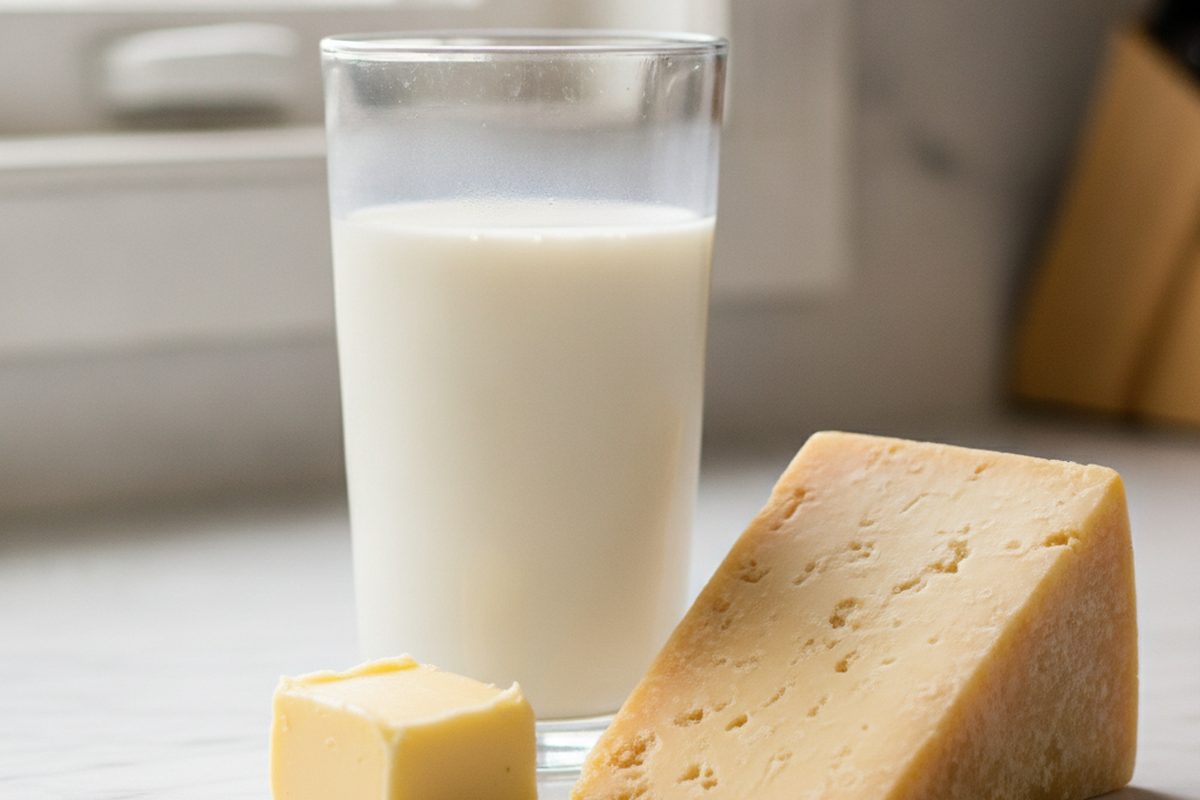
Chemistry, briefly and painlessly. Fatty acids are chains of carbon atoms with an acid group on the end. Most of the fats you eat have an even number of carbons — palmitic acid has 16, stearic acid has 18. C15:0 is an oddball, literally: fifteen carbons, no double bonds (that's the ":0"), giving it the formula C15H30O2. Odd-chain saturated fats are rare in the human diet, and they come mainly from one place: the fat in dairy from ruminant animals — whole milk, butter, cheese, yoghurt — with smaller amounts in some fish.
Here's the genuinely interesting bit. Because your body makes almost no C15:0 on its own, your blood levels depend heavily on what you eat. And large observational studies have repeatedly found that people with higher circulating C15:0 tend to have lower rates of type 2 diabetes, heart disease and other metabolic trouble. For years that was written off as a simple marker — "ah, it just means you eat dairy." The new and more provocative idea is that C15:0 isn't just a bystander marking a habit, but an active ingredient your cells actually need. That's the leap from marker to essential nutrient, and it's a big one.
The case for: it does interesting things in a dish
The most eye-catching evidence comes from cell-based screening. In a 2023 study in Nutrients, researchers put C15:0 through a battery of human cell systems and compared it head-to-head with three compounds the longevity crowd obsesses over: acarbose, metformin and rapamycin. C15:0 showed activity in 10 of 12 cell systems and, at its optimal dose, shared two dozen relevant activities with rapamycin — including anti-inflammatory and anti-fibrotic effects. Mechanistically, it appeared to nudge the same master switches involved in ageing: activating AMPK (your cellular "energy's low, tidy up" signal) and dialling down mTOR (the "grow, grow, grow" signal that longevity research keeps trying to restrain).[1]
There's a second, more physical argument for why C15:0 might matter. A 2024 review lays out what its authors call the "Cellular Stability Hypothesis": because C15:0 is a sturdy, straight saturated chain, it may sit in your cell membranes and make them more robust — more resistant to a form of damage called ferroptosis, where fragile fats in the membrane oxidise, rope in iron, and help wreck the mitochondria. Under this model, running chronically low on C15:0 (below about 0.2% of your circulating fatty acids) leaves membranes fragile and more prone to the machinery behind diabetes, heart disease and fatty liver.[2] It's an elegant hypothesis. Note the word: hypothesis.
The case for caution: who's holding the pipette?
This is where a clean approach earns its keep, because two things are true at once. The mechanisms are plausible and interesting — and a large share of the most enthusiastic research comes from scientists affiliated with Seraphina Therapeutics, the company that makes fatty15. That doesn't make the findings wrong; industry scientists do real science all the time. But when the group defining a brand-new "deficiency syndrome" is also the group selling the cure for it, the honest response is to raise an eyebrow and wait for independent replication. Extraordinary claims — and "we found the first essential fatty acid in 90 years" is extraordinary — need extraordinary, and ideally disinterested, evidence.
The other gap is the one that matters most on a site like this: human outcomes. Almost all the exciting data is from cells and animals. When independent French researchers tested C15:0 in essential-fatty-acid-deficient rats in 2024, they found it did partly rescue the growth problems those animals had — a real result, and a point in C15:0's favour — but it was rats, and the mechanism (a previously unknown family of "n-8" fats) is still being worked out.[3] Interesting science; not a human health claim.
The one human trial, in full and honest detail
So what happens in actual people? As of now there is essentially one randomised controlled trial that supplemented C15:0, and it's worth reporting precisely rather than hyping. The 2023 TANGO trial, published in the American Journal of Clinical Nutrition, enrolled 88 Chinese women with non-alcoholic fatty liver disease and split them into three groups for 12 weeks: a Mediterranean-style diet with a C15:0 supplement, the same diet without it, and a control group eating as usual.[4]
The results were sensible and modest. Both diet groups lost weight and improved their liver fat and blood markers — mostly because, well, they ate better and lost weight. The specific extra contribution of the C15:0 supplement was a further reduction in LDL ("bad") cholesterol and a shift in the gut microbiome toward more Bifidobacterium. That's a genuine, measurable benefit, and it's a legitimate reason to keep studying the stuff. But look at what it is not: it's not a study in healthy people, it's not about living longer, and the supplement rode on top of an already-improving diet. Reading "C15:0 lowers cholesterol in fatty-liver patients on a Mediterranean diet" and buying a bottle to reverse your biological age is a very long stretch across a very thin plank.
The clean verdict
C15:0 is one of the more genuinely interesting molecules to hit the longevity conversation in a while — which is exactly why it deserves clear eyes rather than a shopping cart. Strip away the dolphin romance and the "essential" branding and you're left with a real, coherent scientific story that is still mostly unproven in humans. The mechanisms are plausible, the observational links to better metabolic health are consistent, and the safety signal so far looks fine. That's a molecule worth watching. It is not, yet, a molecule worth building a protocol around.
The practical takeaway is refreshingly cheap. If C15:0 does turn out to matter, the main lesson isn't "buy the supplement" — it's "stop being scared of full-fat dairy." A bit of whole milk, real butter or good cheese in an otherwise sensible diet will give you C15:0 the way humans have always gotten it, alongside calcium, protein and fat-soluble vitamins, for a fraction of the price of a proprietary capsule. If you're curious and have money to spare, a C15:0 supplement appears low-risk. Just buy it as an experiment you're running on yourself with your eyes open — not as a proven longevity lever. When the independent human trials land, we'll happily update this page. That's the clean way to do it.
Common questions
It's an emerging claim, not a settled one. An "essential" nutrient is one the body can't make in adequate amounts and whose absence causes a deficiency that supplementation reverses. C15:0 clears the first bar — we make very little and get it from diet, mainly dairy fat. But the deficiency-reversal case leans heavily on cell studies, animal work and researchers tied to the company selling it,[1][2] so "candidate essential fatty acid" is the honest label for now.
It's an odd-chain saturated fat found mainly in full-fat dairy — whole milk, butter, cheese, yoghurt — plus some fish. There's no official recommended intake because it isn't formally classed as essential yet. Proponents suggest circulating levels above roughly 0.2% of total fatty acids are healthier,[2] which for most people just means not going strictly fat-free on dairy — no supplement required.
For most people, not yet. The one human randomised trial tested C15:0 on top of a Mediterranean diet in women with fatty liver and found a modest extra drop in LDL cholesterol[4] — promising but narrow, and not a general-population or longevity result. The safety profile looks reasonable and the science is worth watching, but full-fat dairy in a balanced diet is the cheaper, better-evidenced route.
References
- Venn-Watson S, Schork NJ. Pentadecanoic Acid (C15:0), an Essential Fatty Acid, Shares Clinically Relevant Cell-Based Activities with Leading Longevity-Enhancing Compounds. Nutrients. 2023;15(21):4607. PubMed: 37960259. doi:10.3390/nu15214607
- Venn-Watson S. The Cellular Stability Hypothesis: Evidence of Ferroptosis and Accelerated Aging-Associated Diseases as Newly Identified Nutritional Pentadecanoic Acid (C15:0) Deficiency Syndrome. Metabolites. 2024;14(7):355. PubMed: 39057678. doi:10.3390/metabo14070355
- Ciesielski V, Guerbette T, Fret L, et al. Dietary pentadecanoic acid supplementation at weaning in essential fatty acid-deficient rats shed light on the new family of odd-chain n-8 PUFAs. J Nutr Biochem. 2024;137:109814. PubMed: 39617355. doi:10.1016/j.jnutbio.2024.109814
- Chooi YC, Zhang QA, Magkos F, et al. Effect of an Asian-adapted Mediterranean diet and pentadecanoic acid on fatty liver disease: the TANGO randomized controlled trial. Am J Clin Nutr. 2024;119(3):788–799. PubMed: 38035997. doi:10.1016/j.ajcnut.2023.11.013
Study data sourced via PubMed.